
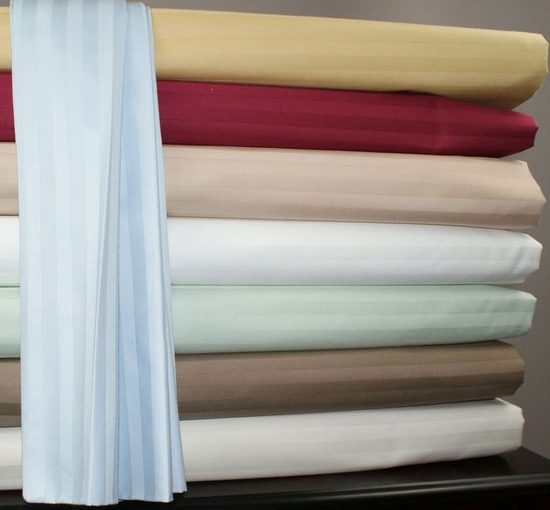
This post looks at why a 600 thread count often hits the right balance for Egyptian cotton sheets. It shows how honest yarn counting and extra-long staple fibers matter more than a big number on the package.
Key Takeaways:
- Thread count should count each yarn once, so inflated multi-ply numbers can hide thin, weak fabric.
- Extra-long Egyptian cotton fibers make yarn stronger and smoother, which helps sheets last longer.
- A 600 count tends to balance softness, weight and airflow for comfortable sleep through the year.
- Check the fiber line and yarn ply before you buy, since the cotton matters more than the count.
Shopping for sheets can get unnecessarily complicated. When you see the large figure embossed on the label, you assume the larger the number, the better the item’s quality. But after several months, you find the material hardening and pilling. If this has been your experience, then try the medium grade. For some reason, the medium grade seems overlooked, perhaps because 600 count sounds lower than 1000 and 1200. However, it may strike a balance between softness and strength.
But why should you choose 600 thread count Egyptian cotton sheets? It all depends on your needs. Let us see.
What Thread Count Really Measures on Egyptian Cotton Sheets
Thread count is the total of lengthwise and crosswise yarns in a set distance of fabric, and each yarn counts as one unit even when it is twisted from several strands.
Here is why that matters. Some sheets reach huge numbers by counting every strand inside a plied yarn. According to FTC guidelines, labeling a two-ply fabric with 300 counts as one with 600 counts could mislead consumers about its quality.
This means a very high number can hide yarn that is extremely fine and weak. A genuine 600-count fabric typically indicates finer yarn woven densely without impeding airflow.
Why Egyptian Cotton Fiber Length Makes the Difference
Thread count is just half of the equation. The rest is determined by the fiber itself. Cotton from Egypt falls under the species G. barbadense and has characteristics such as long staples measuring 1 3/8 inches or more. These staples have increased strength because each thread has fewer joints. The fibers also thin as they lengthen.
You notice that smoothness on night one. You notice the strength two years later, when the sheets still look and feel right.
How 600 Thread Count Egyptian Cotton Sheets Feel Night After Night
A 600 thread count using long-staple cotton is likely to find its way to a comfortable midpoint:
- Breathable: The weaving permits air flow, something warmer sleepers tend to value.
- Softening with washing: Good long staple cotton tends to soften up with every wash.
- Heavier: It’s a bit heavier than a 300 but lacks the stiffness found in highly dense fabrics.
- Wear: Fine threads with long fibers resist the tendency to pill as short fiber blends do.
But even a 600 doesn’t make everything perfect. Sometimes, a 400 thread count fabric made using 100 percent Egyptian cotton is perceived as more luxurious than a 1000 thread count made using mixed materials. Some people prefer percale fabric to sateen.
So, Is 600 the Sweet Spot for Egyptian Cotton Sheets?
This is true for most sleepers, at least. You get a good feel, plenty of breathability for hot summer nights, and a fabric that likely gets better with time rather than deteriorating. Yet the real issue is the cotton, not the count itself, and the label, not the advertising.
When you see such a large number on the package, will you look closer at the yarn and fiber first? This simple action can save you many restless nights.